pricing · dsp · 2026-07-18
DSP take rates explained: what you actually pay
How media take rates work on a DSP, why opaque fees hide inside CPMs, and how Waveband's published rate from 12% toward at-cost changes the math.
A take rate is the percentage of media spend a platform keeps. Many buyers never see it: it is buried in managed-service spreads, seat fees, or "tech" adders. Published take rates make the fee legible.
If you cannot express platform cost as a percent of gross media, you cannot defend agency margin to a CFO.
Where fees hide
Managed desks often quote a media CPM that already includes their spread. Seat licenses look cheap until data and service lines stack up. "Platform fees" that vary by channel make month-end reconciliation a scavenger hunt.
Ask for a single all-in number at your spend level. Then ask what happens when volume doubles.
- Media take rate as % of gross media
- Flat SaaS by plan (separate from media)
- Data and managed adders called out, not buried
- Volume ratchets that lower take rate as spend grows
- Agency markup stays on your rate card
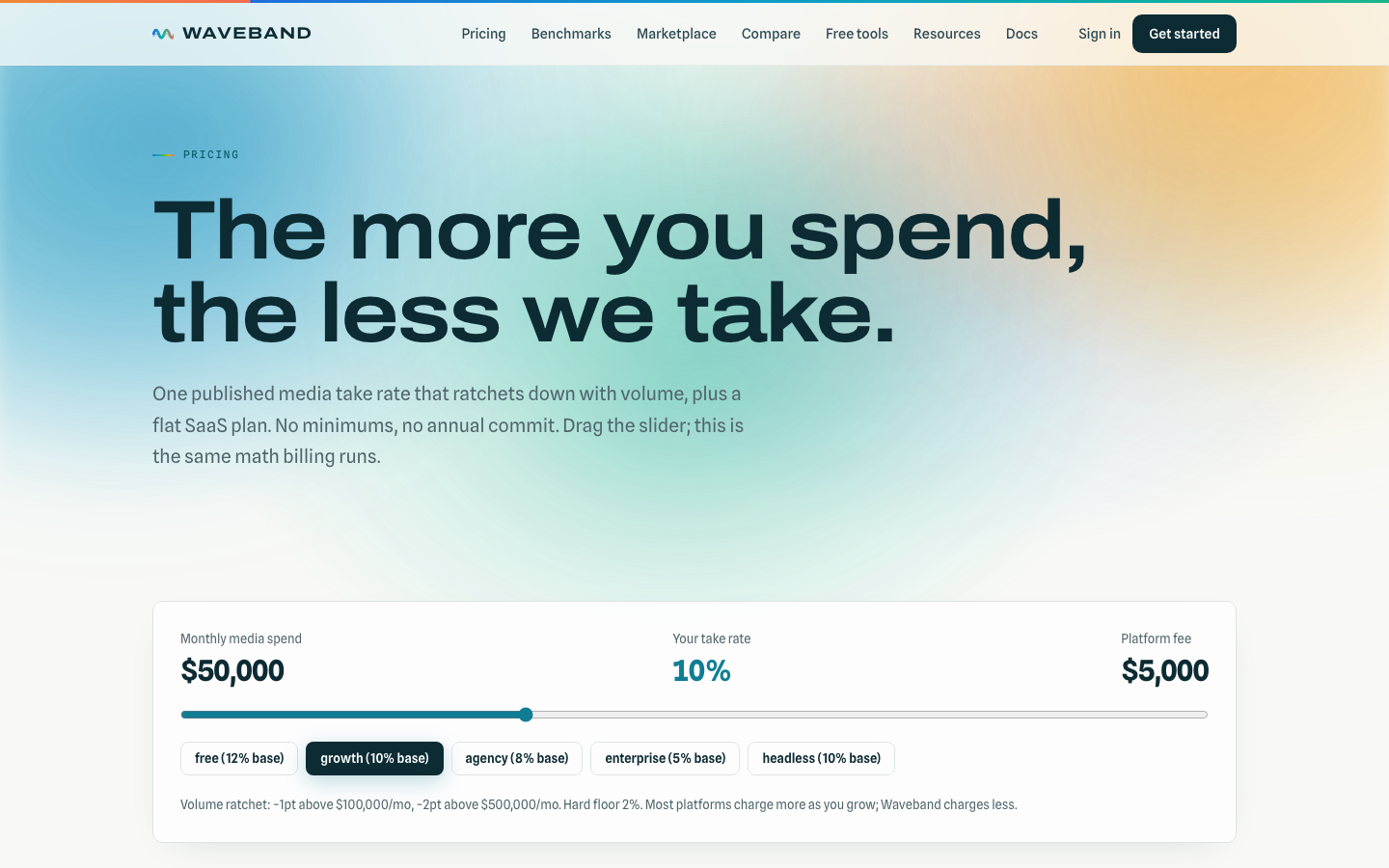
Waveband's schedule
Waveband publishes a media take rate that starts at 12% and ratchets toward at-cost as monthly volume grows, plus flat SaaS by plan.
The pricing slider and savings calculator use the same function as billing. What you model is what you pay.
How to compare vendors
Ask vendors for all-in fee as a percent of gross media. Include data, seat, and managed adders. Then compare against a published schedule at your spend level, not a demo CPM.
If two vendors quote the same CPM but one cannot show take rate, assume the opaque one is more expensive until proven otherwise.
Agency markup vs platform take rate
Your rate card markup is how you get paid for strategy and service. The platform take rate is the cost of the seat and clearing.
Keep them separate in client conversations when you can. White-label portals help: clients see your prices; you see Waveband's schedule underneath.
When a client asks why programmatic costs more than a social boost, show both lines. Confusion usually comes from mixing seat cost into creative or strategy fees.
Run the numbers before you migrate
Plug last quarter's media into the take-rate savings tool. If the delta does not fund the migration effort, stay put until volume or pain rises.
If it does, the checklist is operational: same-seat CTV, Signal measurement, proposal flow. Pricing alone is not a platform.
Re-run the model at three volumes: last quarter, a win you expect next quarter, and a stretch book. Take rates that look fine at pilot spend can punish you when a single retail client doubles the seat. Waveband's ratchet is designed so larger months pay a lower media take rate, which is the opposite of many negotiated "starter" deals that get worse when you succeed.