agencies · growth · 2026-07-15
From brief to signed proposal to live campaign in one pipeline
The agency growth loop (plan, propose, sign, launch) usually spans four tools and two weeks. Waveband collapses it into one flow.
The slowest part of agency growth is not media performance. It is the pipeline before the first impression. A brief becomes a spreadsheet, the spreadsheet becomes a deck, the deck becomes a PDF, the PDF gets signed, and then someone re-keys the whole thing into an ad platform.
Every handoff loses context. Budgets drift. Flight dates get typed wrong. The client signed a tiered offer and the trafficker launches a single flat plan. That is not a tooling preference. It is a structural tax on how agencies grow.
One flow from brief to signed offer
In Waveband, the media planner turns a brief and a budget into tiered channel splits priced off your rate card. You can accept the draft as-is or edit every split before the client sees it.
One click renders it as a proposal microsite on your domain (good, better, best) with click-to-sign built in. The client reviews the same numbers your team priced, not a rebuilt deck that drifted overnight.
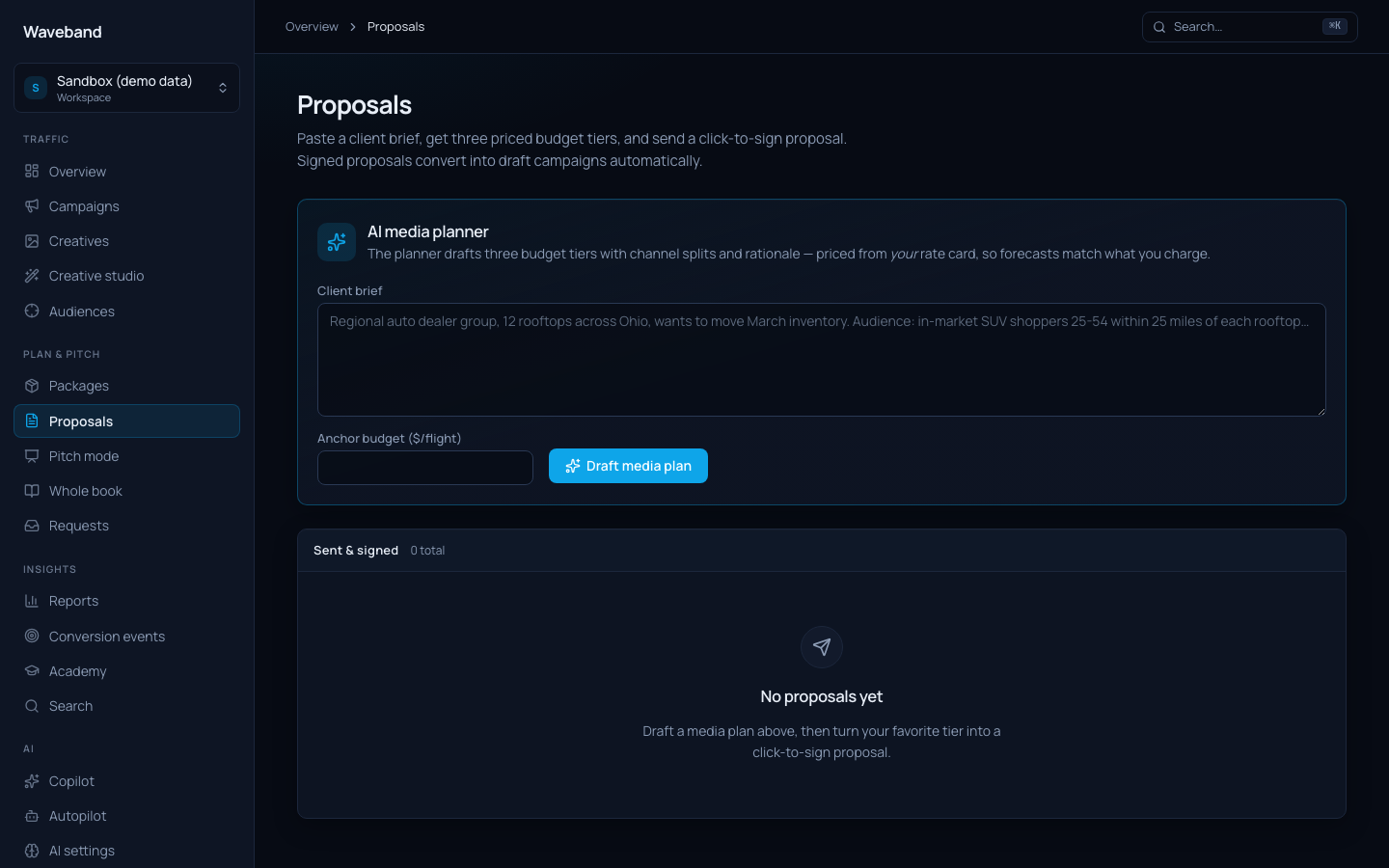
What the client sees
The pitch surface is a branded microsite, not a PDF email attachment. Clients compare tiers, ask questions against the live offer, and sign when ready.
Because the offer is priced from your rate card, markup stays yours. Waveband's published take rate sits under the media line. You are not inventing a second fee story for the client portal.
- Good / better / best tiers priced from your rate card
- Click-to-sign without leaving the microsite
- Accepted tier maps to draft campaigns, not a blank trafficking form
- White-label hostnames and themes so the client stays in your brand
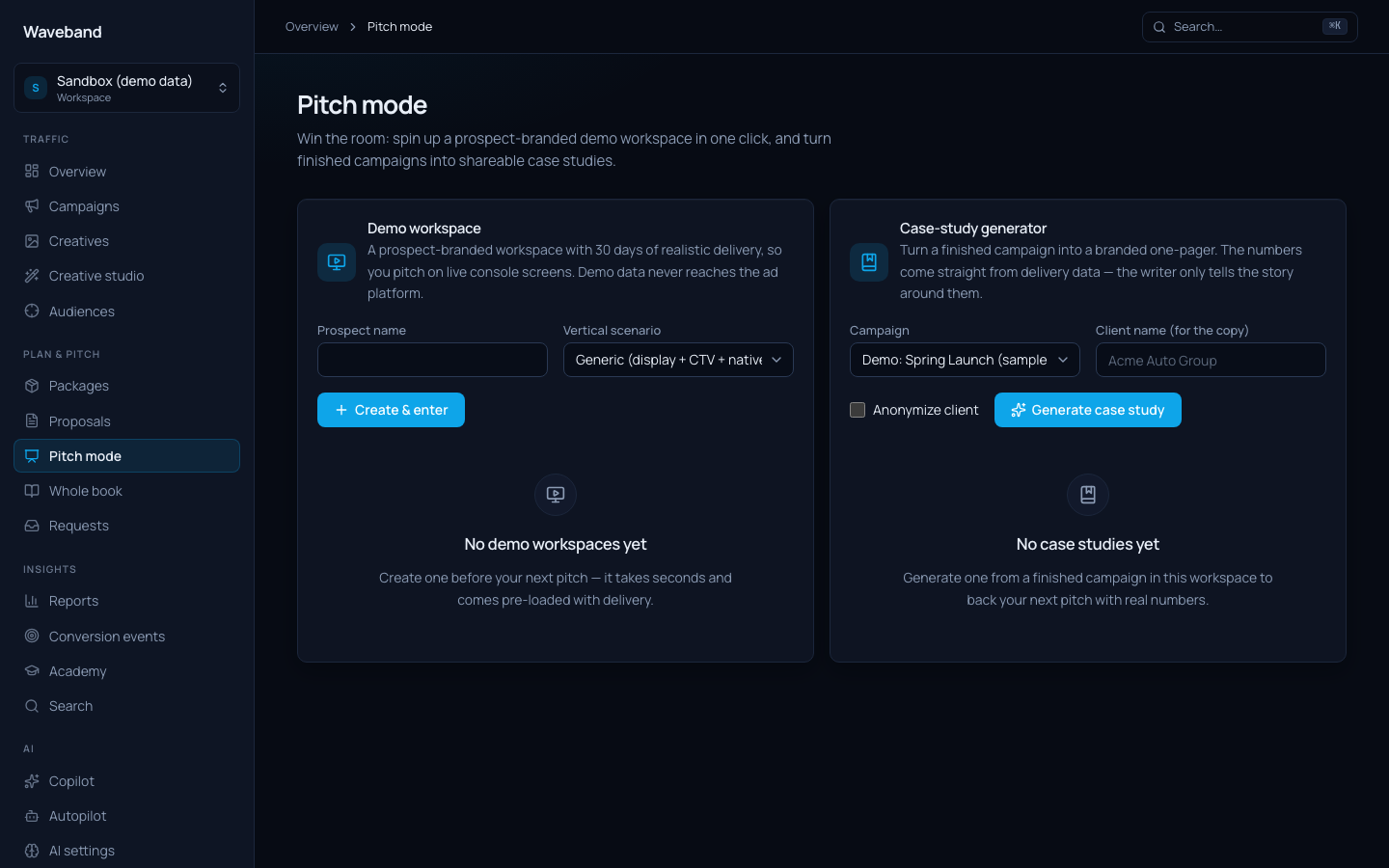
Signed means draft campaigns, not a re-key
When the client signs, the accepted tier becomes draft campaigns: correct budgets, flight dates, channels, and targeting summaries, ready for a trafficker to review and launch.
The re-keying step is gone, and so is the class of errors it produced. Operators still review before go-live. Automation does not skip human judgment on spend.
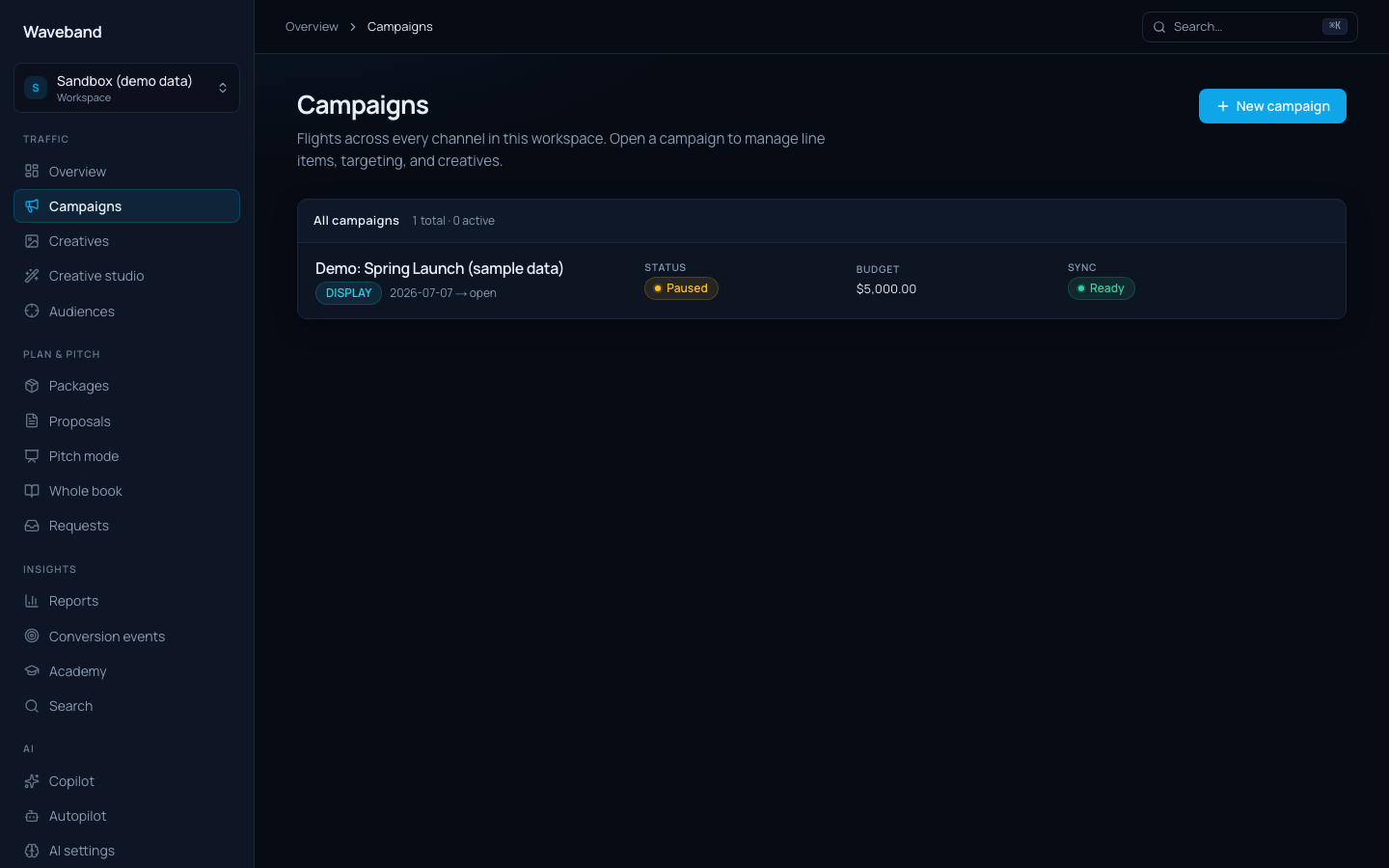
Close the loop after delivery
After the campaign runs, the case-study generator drafts a results narrative from actual delivery data. Client health scores flag accounts trending toward churn before the quarterly review finds out.
The growth loop runs on the same data spine as the media itself. Proposal, launch, report, and renew are not four products glued together with a shared login.
Who this is for
Independent and mid-size agencies that sell multi-channel books and cannot afford a two-week lag between signature and first impression. If you already run a self-serve seat and still rebuild every plan in slides, this is the missing piece.
Start free with no spend minimums. Add optional Autopilot later if pacing work does not deserve a human hour. The proposal-to-campaign path does not require agents or AI to work.