dsp · architecture · 2026-07-18
Own buying seat vs meta-DSP middleware
Meta-DSPs aggregate other platforms' seats. An owned buying seat is the platform itself: white-label, API-complete, with economics and data that stay with you.
Some products market themselves as a single UI over many demand platforms. That meta layer can reduce trafficking friction, but you still inherit each underlying seat's minimums, data rules, and economics.
An owned buying seat is different. Campaigns, creatives, reporting, and billing run on one set of rails you can brand and integrate against.
What an owned seat means
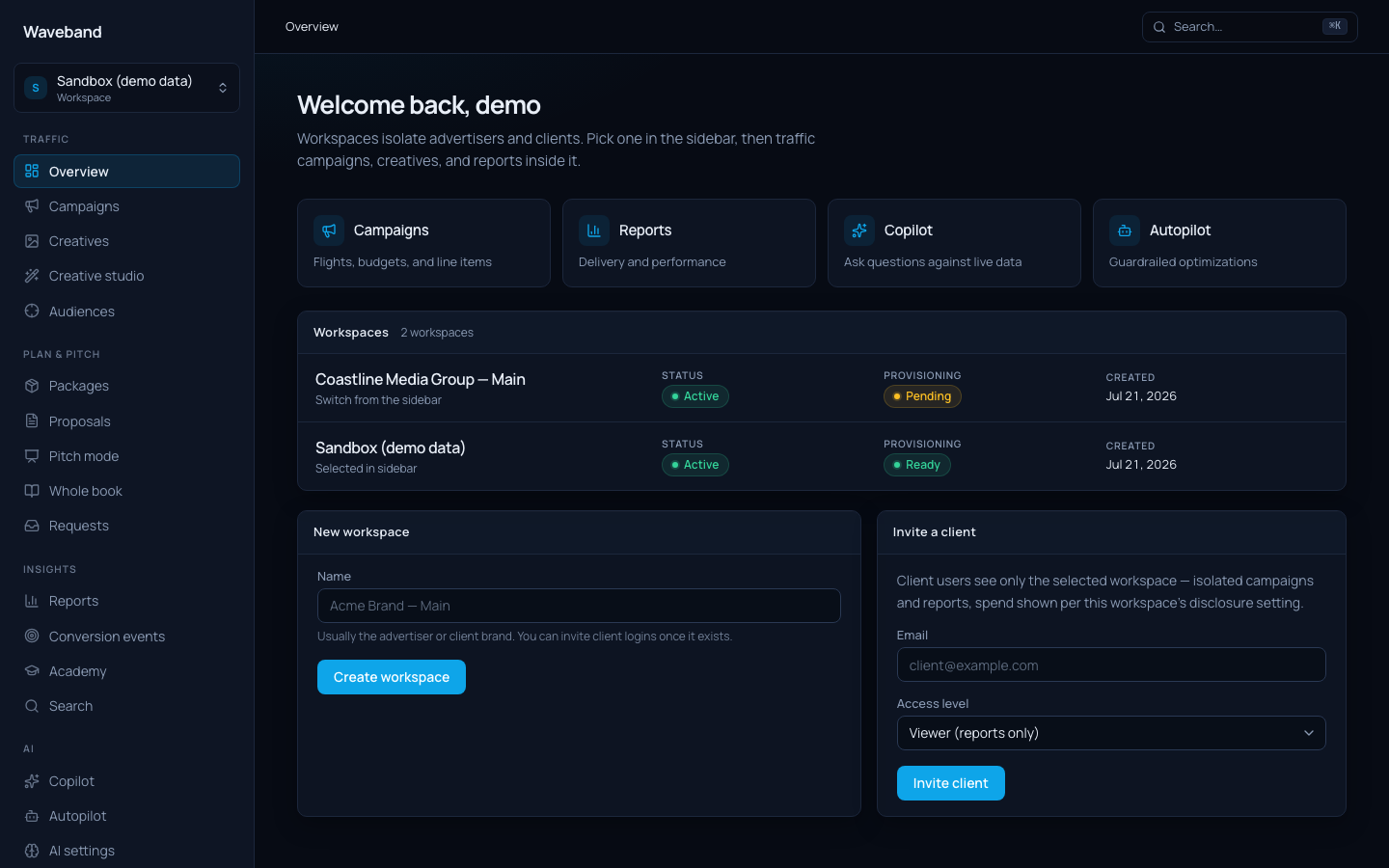
Waveband is the buying seat: campaigns, creatives, reporting, billing, and white-label portals run on Waveband rails. You are not renting a thin skin over someone else's platform identity.
When the API says create campaign, it creates a Waveband campaign. When Signal exports events, they are yours to keep.
What middleware optimizes for
Meta layers shine when your strategy truly requires operating many unrelated enterprise seats under one traffic UI. They do not remove the underlying contracts.
You still face each seat's minimums, each seat's data export limits, and each seat's fee schedule. The UI unification is real. The economic unification usually is not.
- Owned seat: one economics schedule, one data model, one API
- Meta layer: one UI over many inherited seats
- White-label depth depends on who owns identity and billing
- Measurement portability is easier when events are first-party
- Agents and Autopilot need clear spend ceilings on one policy engine
When middleware still makes sense
If your clients demand specific enterprise seats you cannot replace, a meta layer may fit as a trafficking convenience.
If you want one branded product for clients with transparent take rate and portable measurement, own the seat.
API-complete as the tell
Ask whether every console action is available over API with the same scopes. Meta layers often expose a subset. Owned seats that are API-first treat the console as just another client.
Resellers building products should prefer the owned-seat path. Skinning five underlying identities is a permanent integration tax.
Choose with the end state in mind
If success looks like a branded programmatic product with your rate card, Waveband's owned seat is the shorter path. If success looks like operating every enterprise logo under one grid, evaluate middleware honestly and budget for the inherited constraints.
Read the API-first article next if you are a builder. Read agency pricing if you are buying media under your brand.
Also ask who owns the client relationship when something breaks: the meta UI vendor, or each underlying seat's support queue. Mid-size agencies cannot afford three tickets for one pacing bug. An owned seat collapses that path to one audit log and one support line.