white-label · agencies · 2026-07-18
White-label DSP vs self-serve DSP: what agencies actually need
Self-serve is how you buy. White-label is how clients see the platform. Agencies usually need both: a real seat under your brand, not just a logo swap.
Buyers often treat "self-serve DSP" and "white-label DSP" as synonyms. They are not. Self-serve describes who operates campaigns. White-label describes whose brand clients see: domain, theme, portals, and emails.
Agencies usually need both. A seat you can operate, and a client experience that never forces your advertiser to learn another platform name.
When self-serve alone is enough
In-house brand teams often need a self-serve seat with transparent economics and first-party measurement. They may never show a client portal.
Self-serve without white-label still beats renting a desk. You keep decision rights, pacing control, and a published take rate you can explain to finance.
When white-label matters
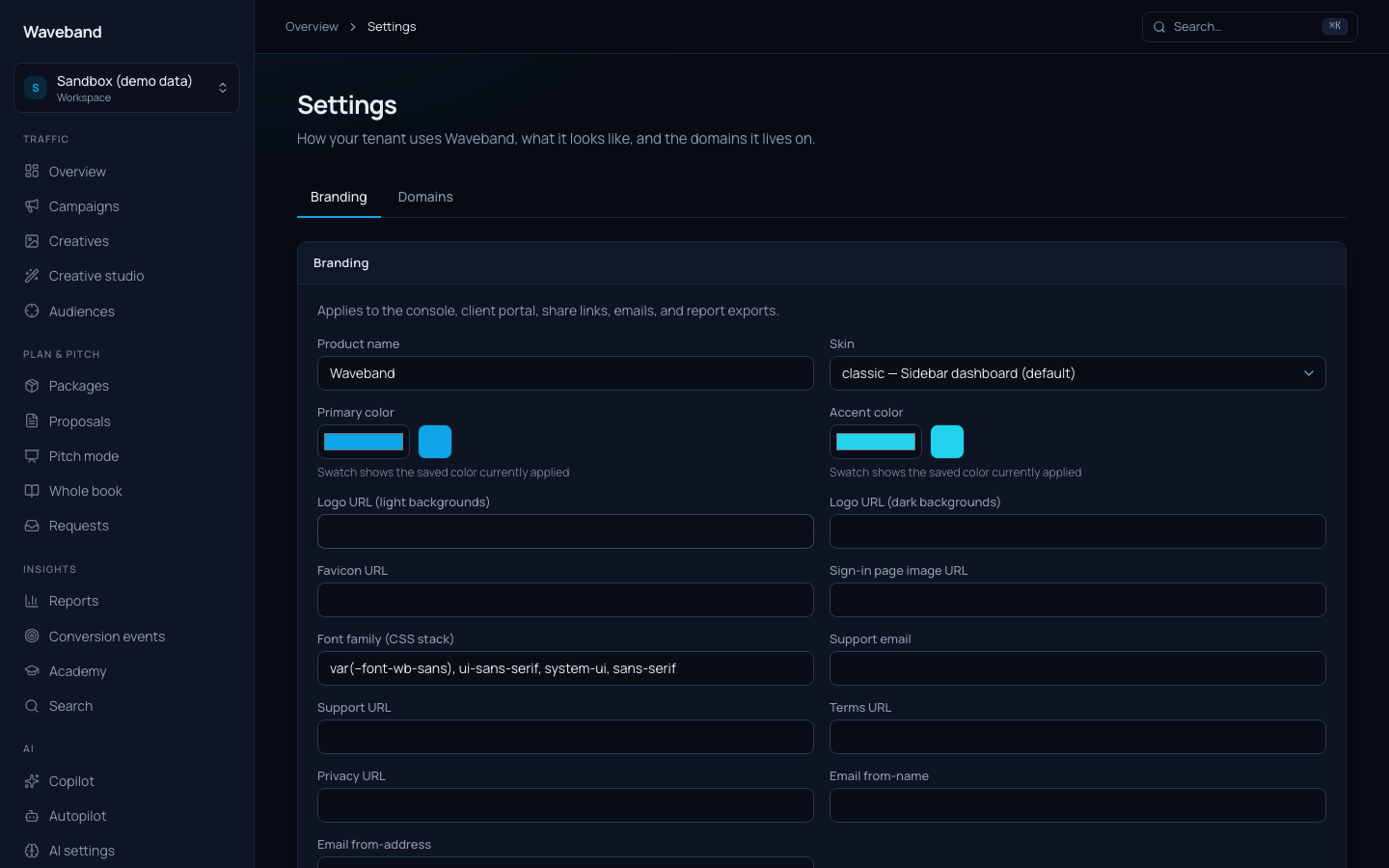
Agencies and resellers need isolation: each client sees only their campaigns at prices you set. Waveband white-labels hostnames, themes, emails, and exports so clients never need to know the underlying platform name.
Logo swaps without portal isolation are theater. If Client A can glimpse Client B's campaigns, you do not have white-label. You have a shared login with a favicon.
- Self-serve = who operates (your team)
- White-label = whose brand clients see
- Per-client isolation on campaigns and reporting
- Custom hostnames, themes, and transactional emails
- Your rate card markup sits above Waveband's take rate
What agencies should demand in writing
Ask whether white-label covers client portals, proposal microsites, exports, and email. Ask whether operators still use a full seat or a reduced reseller console.
Ask how billing appears to the end client. Your markup should be yours. The platform take rate should be published and separable.
Headless for platform builders
Resellers who replace the UI entirely need an API-complete seat, not a themed iframe. Waveband's console is a client of the same API partners get.
If you are building a product on top of a buying seat, read the reseller persona and the API docs before you commit to a skin that cannot expose half the capabilities.
How Waveband combines both
Operate self-serve. Present white-label. Keep optional Autopilot and MCP off until you want them. That combination is how independent agencies sell a branded programmatic product without building a DSP from scratch.
Compare against building in-house only if you truly want to own every trafficking and billing edge case. Most mid-size books should buy a seat and brand it.
Proposal microsites, client portals, and operator console can share one brand system. That is how you stop explaining three different logins on a kickoff call. Pricing stays honest: your markup on the rate card, Waveband's published take rate underneath, Signal measurement you can export if the relationship ends.